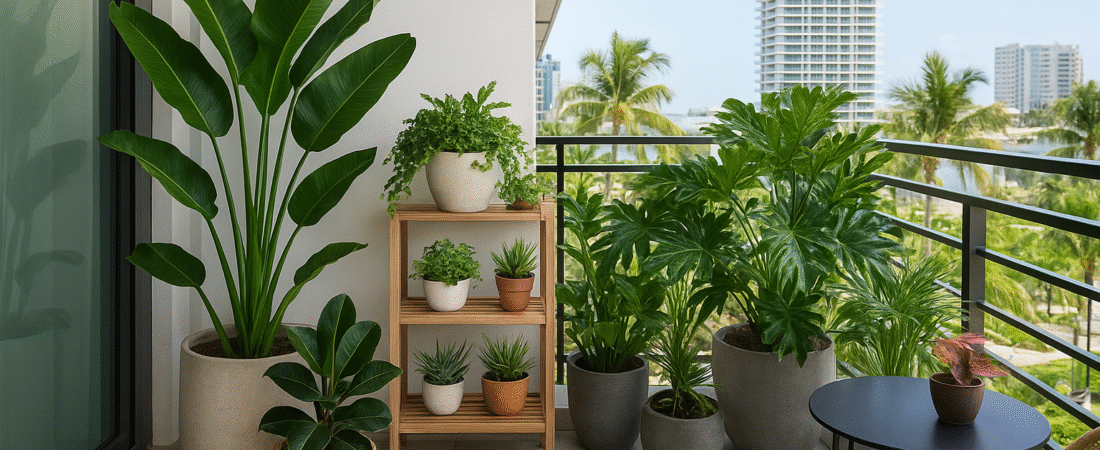
If you’ve ever struggled to keep your garden alive through Miami’s brutal summers, you’re not alone. The secret most gardeners eventually discover is simple: stop fighting the climate and start working with it. 🌿 Native plants are the answer.
Native plants are species that have evolved naturally in South Florida over thousands of years. They’re perfectly adapted to Miami’s heat, humidity, sandy soils, and even hurricane season. Once established, they require minimal watering, little to no fertilizer, and far less maintenance than exotic species — making them ideal for homeowners who want a beautiful yard without spending every weekend on upkeep.
In this guide, we’ll walk you through the best native plants for Miami gardens, how to use them, and why making the switch is one of the smartest decisions you can make as a South Florida homeowner. 🏡
🌞 Why Choose Native Plants for Your Miami Garden?
Before diving into the list, it’s worth understanding why native plants outperform exotic species in Miami’s unique environment.
Miami sits in USDA Hardiness Zones 10-11, which means year-round warmth, high humidity, intense sun, and a distinct wet and dry season. Most ornamental plants sold at garden centers are bred for temperate climates — they struggle here and demand constant attention.
Native plants, on the other hand, have deep root systems adapted to survive dry spells, tolerate salt spray near the coast, and bounce back quickly after tropical storms. They also support local wildlife, attracting butterflies, native bees, and birds that help keep your garden ecosystem balanced. 🦋🐝
The result? A garden that looks great, costs less to maintain, and actually helps the local environment. ✅
🌱 Top 10 Native Plants for Miami Gardens
1. 🔥 Firebush (Hamelia patens)
One of the most popular native plants in South Florida, Firebush produces clusters of bright orange-red tubular flowers almost year-round. It grows fast, tolerates drought once established, and is an absolute magnet for hummingbirds and butterflies. 🐦 Plant it in full sun for best flowering results. It works beautifully as a hedge or background shrub.
2. 🌀 Coontie (Zamia integrifolia)
Florida’s only native cycad, Coontie is practically indestructible. 💪 It thrives in full sun or partial shade, requires almost no water once established, and stays a manageable 2-3 feet tall. It’s the sole host plant for the endangered Atala butterfly, making it a meaningful addition to any garden. Perfect for borders, foundation plantings, or mass plantings under trees.
3. 🍊 Simpson’s Stopper (Myrcianthes fragrans)
A versatile native shrub that can be grown as a hedge, privacy screen, or small tree. It produces small white fragrant flowers followed by orange-red berries that birds love. 🐦 It handles Miami’s clay and sandy soils equally well and is highly salt-tolerant — great for coastal properties.
4. 🌾 Muhly Grass (Muhlenbergia capillaris)
If you want something with serious visual impact for almost zero effort, Muhly Grass delivers. 😍 In fall, it produces stunning clouds of pink-purple plumes that sway in the breeze. It’s drought-tolerant, thrives in full sun, and looks spectacular planted in masses along walkways or as a border accent.
5. 💜 Beautyberry (Callicarpa americana)
Beautyberry earns its name in late summer and fall when it produces striking clusters of bright purple berries along its branches. It grows in partial shade — making it one of the few showy natives that works well under tree canopies. Birds devour the berries, making it a great wildlife plant. 🐦
6. 🌼 Gaillardia (Gaillardia pulchella) — Blanket Flower
One of the toughest native wildflowers you can grow in Miami. Blanket Flower produces bold red and yellow daisy-like blooms almost continuously. ☀️ It thrives in poor, sandy soils, needs minimal water, and reseeds itself naturally. Plant it in borders or mixed flower beds for a pop of color that practically takes care of itself.
7. 🌳 Walter’s Viburnum (Viburnum obovatum)
A native shrub that works overtime in the garden. It offers dense foliage for privacy screening, white spring flowers for pollinators, and dark berries for birds in winter. 🍂 It can be pruned into a formal hedge or left to grow naturally. Extremely adaptable to Miami’s varied soil conditions.
8. ☕ Wild Coffee (Psychotria nervosa)
Don’t let the name fool you — Wild Coffee is one of the most elegant native shrubs for shady spots in Miami gardens. 🌿 It produces glossy dark green leaves, small white flowers, and red berries. It’s one of the best host plants for native butterfly larvae and thrives in the shade of larger trees where many plants struggle.
9. 🛡️ Spanish Stopper (Eugenia foetida)
A tough, slow-growing native that’s perfect for hedges and foundation plantings. It tolerates drought, salt, and poor soils like a champion. 💪 The dense foliage provides excellent privacy and the small berries attract birds. Low maintenance doesn’t get much lower than this.
10. ❤️ Salvia (Salvia coccinea) — Tropical Sage
A native wildflower that blooms in red, pink, or white and keeps going almost year-round in Miami. 🌺 It reseeds aggressively, meaning once you plant it, it comes back year after year without any effort. It’s a top nectar source for hummingbirds and butterflies and works beautifully in informal cottage-style gardens.
🛠️ How to Get Started With Native Plants in Miami
Making the switch to native plants doesn’t mean ripping out your entire garden overnight. Here are some practical tips to get started:
- 🪴 Start with one area. Replace one section of your yard — a border, a corner, or a strip along the fence — with native plants first. See how they perform before committing to more.
- 🏪 Buy from native plant nurseries. Not all garden centers carry true Florida natives. Look for nurseries that specialize in native plants or check the Florida Native Plant Society’s nursery directory.
- 💧 Water during establishment. Even drought-tolerant natives need regular watering for the first 3-6 months while their root systems develop. After that, most can survive on Miami’s rainfall alone.
- 📊 Group plants by water needs. Plant natives with similar water requirements together to make irrigation more efficient.
- 🍂 Mulch generously. A 3-inch layer of mulch around your plants conserves moisture, regulates soil temperature, and suppresses weeds — critical during Miami’s dry season.
📋 Best Native Plants for Specific Situations
Not all garden spots are created equal. Here’s a quick reference guide: 👇
- ☀️ Full sun, dry areas: Firebush, Muhly Grass, Gaillardia, Coontie
- 🌤️ Partial shade: Wild Coffee, Beautyberry, Coontie
- 🔒 Privacy hedges: Simpson’s Stopper, Walter’s Viburnum, Spanish Stopper
- 🦋 Attracting wildlife: Beautyberry, Wild Coffee, Firebush, Salvia
- 🌊 Coastal / salt-tolerant: Simpson’s Stopper, Spanish Stopper, Coontie
❓ Frequently Asked Questions
🌿 Are native plants really lower maintenance than exotic plants in Miami?
Yes, significantly! ✅ Once established (usually after one full growing season), most Florida native plants can survive entirely on natural rainfall. They’ve adapted to Miami’s soil chemistry, pest pressures, and climate extremes over thousands of years, which means far less intervention from you.
🏪 Where can I buy native plants in Miami?
Several nurseries in South Florida specialize in native plants, including Fairchild Tropical Botanic Garden’s plant sales, Plant Creations Nursery in Homestead, and various sales organized by the Dade Chapter of the Florida Native Plant Society. Always confirm a plant is a true Florida native, not a cultivar, if supporting local wildlife is a priority. 🦋
🌺 Can I mix native plants with non-native plants in my Miami garden?
Absolutely! 🙌 Many Miami homeowners blend natives with well-adapted non-invasive exotics for visual variety. Just be cautious about invasive species like Brazilian Pepper or Air Potato, which can spread aggressively and crowd out natives. ⚠️
🌟 Final Thoughts
Switching to native plants is one of the best investments you can make in your Miami garden. 🏡 You’ll spend less time watering and fertilizing, save money on your water bill, and create a garden that’s genuinely resilient to South Florida’s challenging conditions.
Start small, be patient through the establishment period, and within one season you’ll wonder why you didn’t make the switch sooner. 🌱✨